
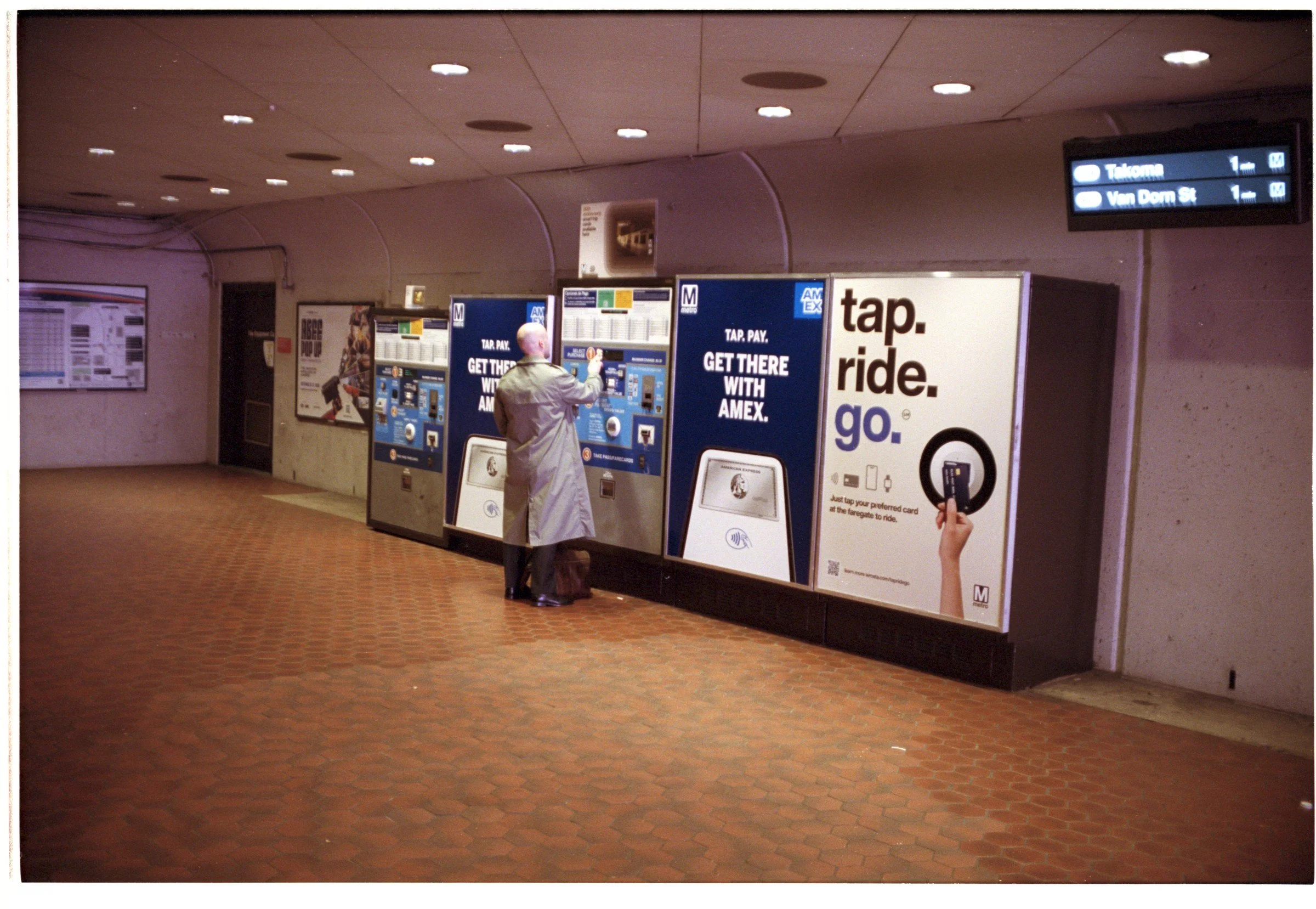
When your wife is going through cancer treatment, your tolerance for pointless friction drops to zero. Shooting and developing film at home has become how I keep my head on straight—a quiet, analog anchor when the rest of life feels unpredictable.
The problem is that every roll ends at the scanner, and scanning 35mm on a Plustek OpticFilm 8200i SE means dealing with SilverFast.
On a hardware level, the Plustek is fine. The software is a nightmare. SilverFast feels like an interface frozen in 2004, buried under nested menus, opaque film profiles, and automatic adjustments that never behave the same way twice. Instead of unwinding with a finished roll, I end up spending my evenings fighting software that refuses to tell me what it’s actually doing to my negatives.
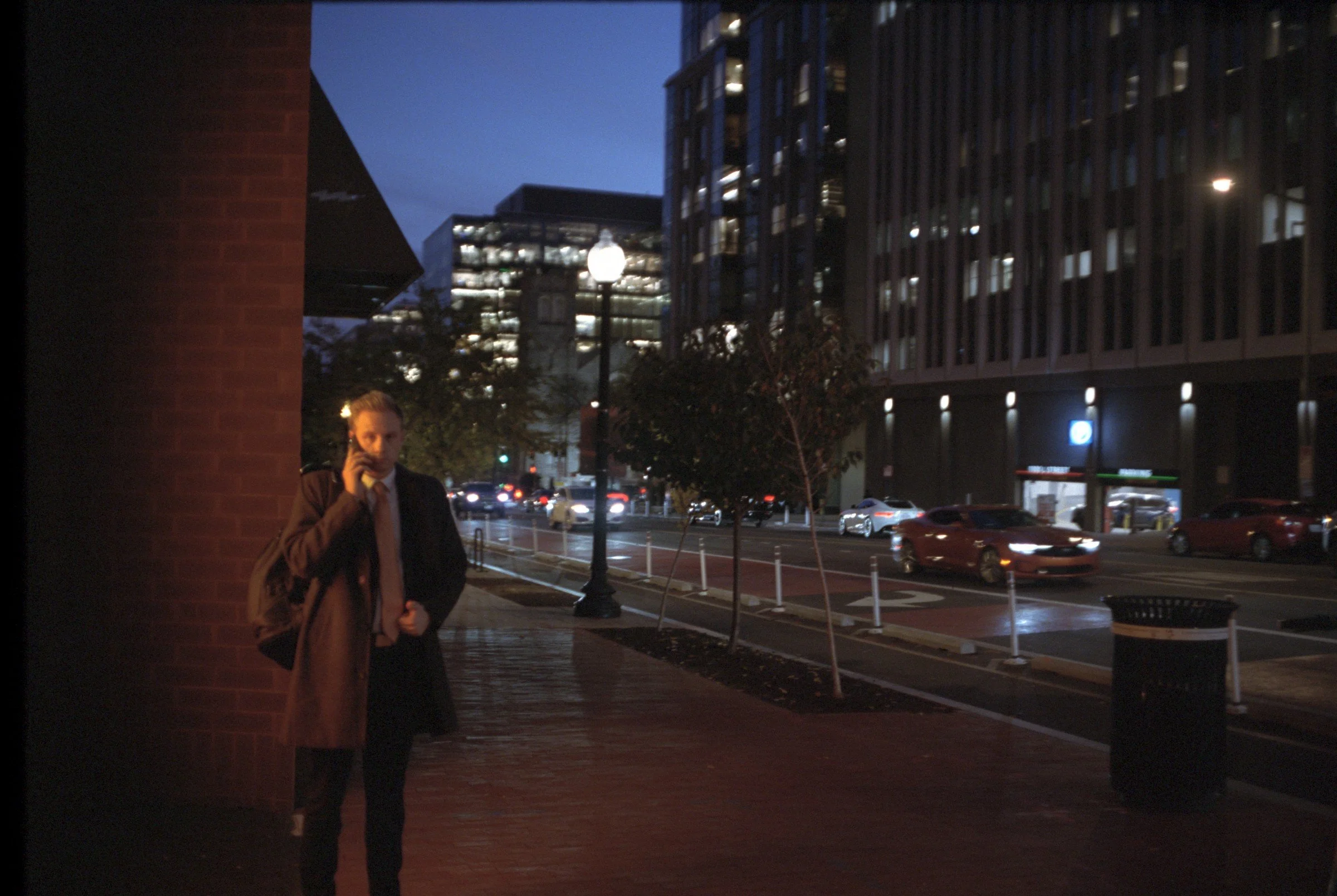
Blue hour outside on Portra 400 pushed a stop. Holding brick and coat texture without blowing out the streetlights.
If you shoot in easy daylight, SilverFast’s presets might get you close enough. If you shoot Portra 400 pushed a stop at dusk, or under the sickly overhead fluorescents of a DC Metro car, its inversion pipeline falls apart. It routinely clips highlights, crushes shadow detail into muddy blacks, and bakes in weird green or magenta casts that take twenty minutes per frame to undo in post. I don’t want a black-box algorithm guessing what my negative is supposed to look like. I just want the straightforward control you get standing in front of a color enlarger.
What I’ve realized is that I don’t actually need SilverFast to invert anything. It can output an uninverted 16-bit linear TIFF along with the scanner’s infrared dust channel, and leave the pixels alone. Everything I hate happens after the sensor pass.

So I’m building BitBath: a standalone native Windows application built around straightforward 16-bit linear math and virtual darkroom controls rather than black-box presets. Instead of forcing you through a scanner driver’s auto-corrections or locking your workflow inside an Adobe subscription, BitBath takes raw linear scans straight from your scanner, lets you dial in color and tone like you’re standing at an optical enlarger, and exports clean archival 16-bit TIFFs and JPEGs.
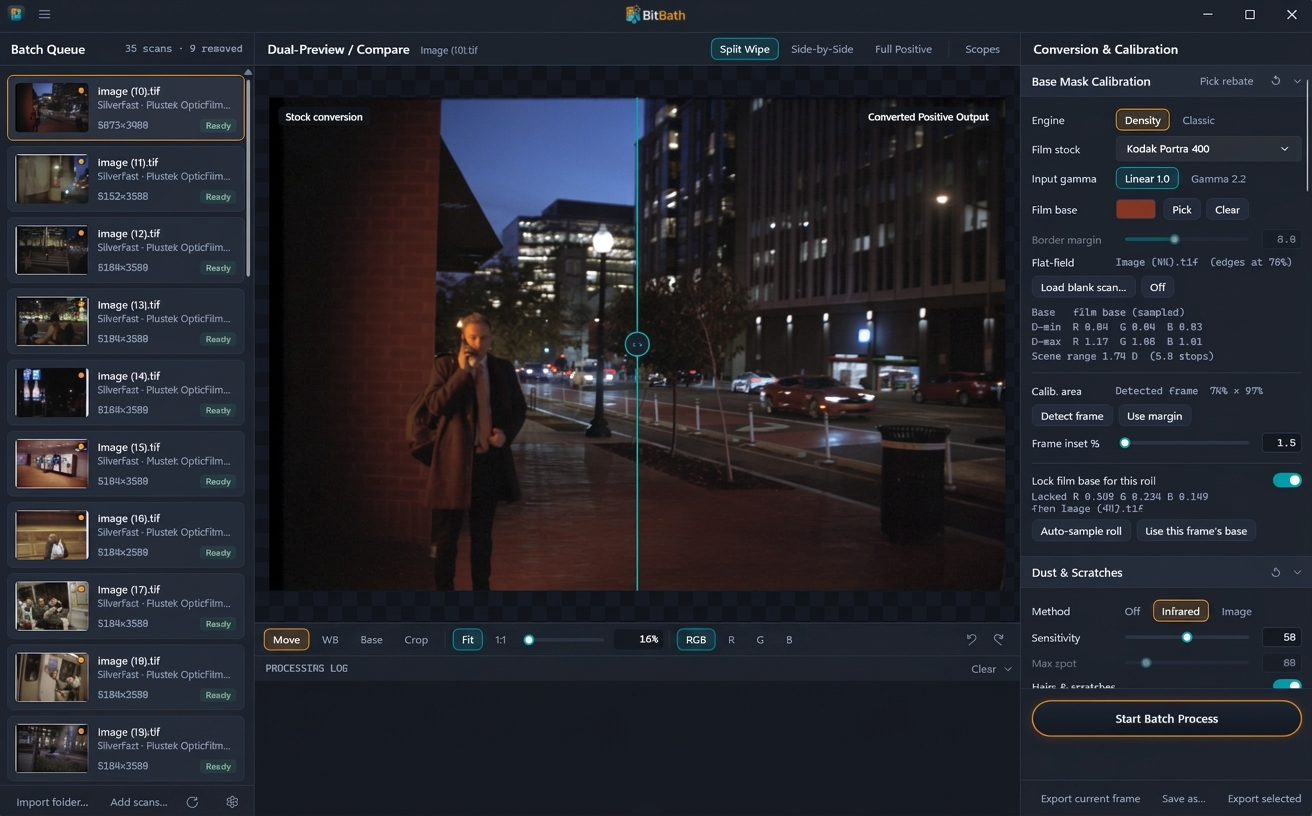
The BitBath workspace: batch queue on the left, live split-wipe comparison in the center, and density controls on the right.
How It Compares to the Usual Options
Before writing my own engine, I looked at the standard ways people invert film at home. Each one solves part of the problem, and each one comes with a trade-off I didn’t want to live with:
SilverFast is bundled with a lot of dedicated scanners and talks directly to the hardware, including the infrared channel. As a raw capture utility, it does its job. As an inversion and color tool, it’s clunky, unpredictable, and far too eager to clip highlights and crush shadow detail.
VueScan is a rock-solid, reliable scanner driver that keeps older hardware running forever. Like SilverFast, though, its primary job is driving the scanner hardware—its built-in negative conversion still relies on generic profiles and auto-exposure guesses that struggle with difficult mixed lighting and pushed film.
Negative Lab Pro produces great results when fed clean scans, and it’s popular for a reason. The catch is that it isn’t a standalone program—it’s a Lightroom Classic plugin. If you don’t want to pay for an ongoing Adobe subscription or manage your entire film archive inside Lightroom’s catalog just to invert a roll of negatives, you’re out of luck.
BitBath sits in the gap between them. You still use SilverFast or VueScan purely as a dumb capture pipe to pull a linear raw file (and infrared channel, if your scanner has one), then hand the roll over to a dedicated, standalone inversion engine.
What Actually Changes in the Workflow
The biggest fix is roll-locked base calibration. Normally, frame-by-frame auto-inverters lose their minds on dark night shots because there isn’t enough neutral highlight information in the frame to anchor the color balance. In BitBath, I sample the orange film rebate once—or let it read a blank frame—lock those RGB density values across the entire 36-exposure roll, and convert every frame against the same baseline.
From there, the controls work the way darkroom printing actually works. Rather than a generic contrast slider that wrecks your ends, you get per-channel H&D curves. In film photography, an H&D curve is simply the S-shaped graph of how a negative responds to light—from the bottom “toe” where faint shadow detail lives, through the middle tones, up to the top “shoulder” where bright highlights gently roll off instead of clipping. When you shoot under mixed fluorescent lights or push film a stop at night, the red, green, and blue layers of the film don’t respond identically at the extremes, which is where ugly color casts come from. Giving you separate Toe and Shoulder sliders for each color channel lets you clean up shadow casts without stripping the warmth out of tungsten streetlights. BitBath also reads the Plustek’s hardware infrared channel directly to clean dust and hairs in a fraction of a second, without the smeary softening SilverFast’s dust removal leaves behind.
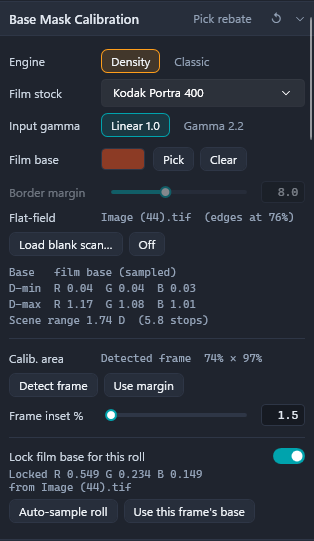
Base Mask Calibration locks the sampled rebate density across the whole roll.
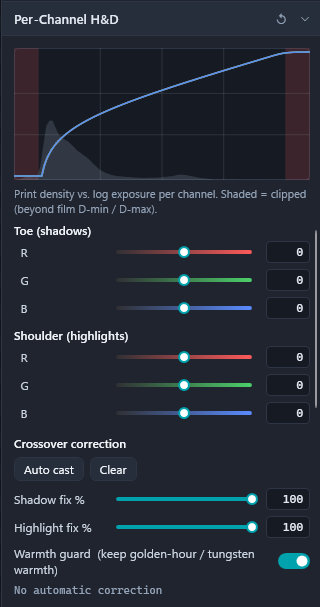
Per-Channel H&D curves handle toe, shoulder, and crossover independently.
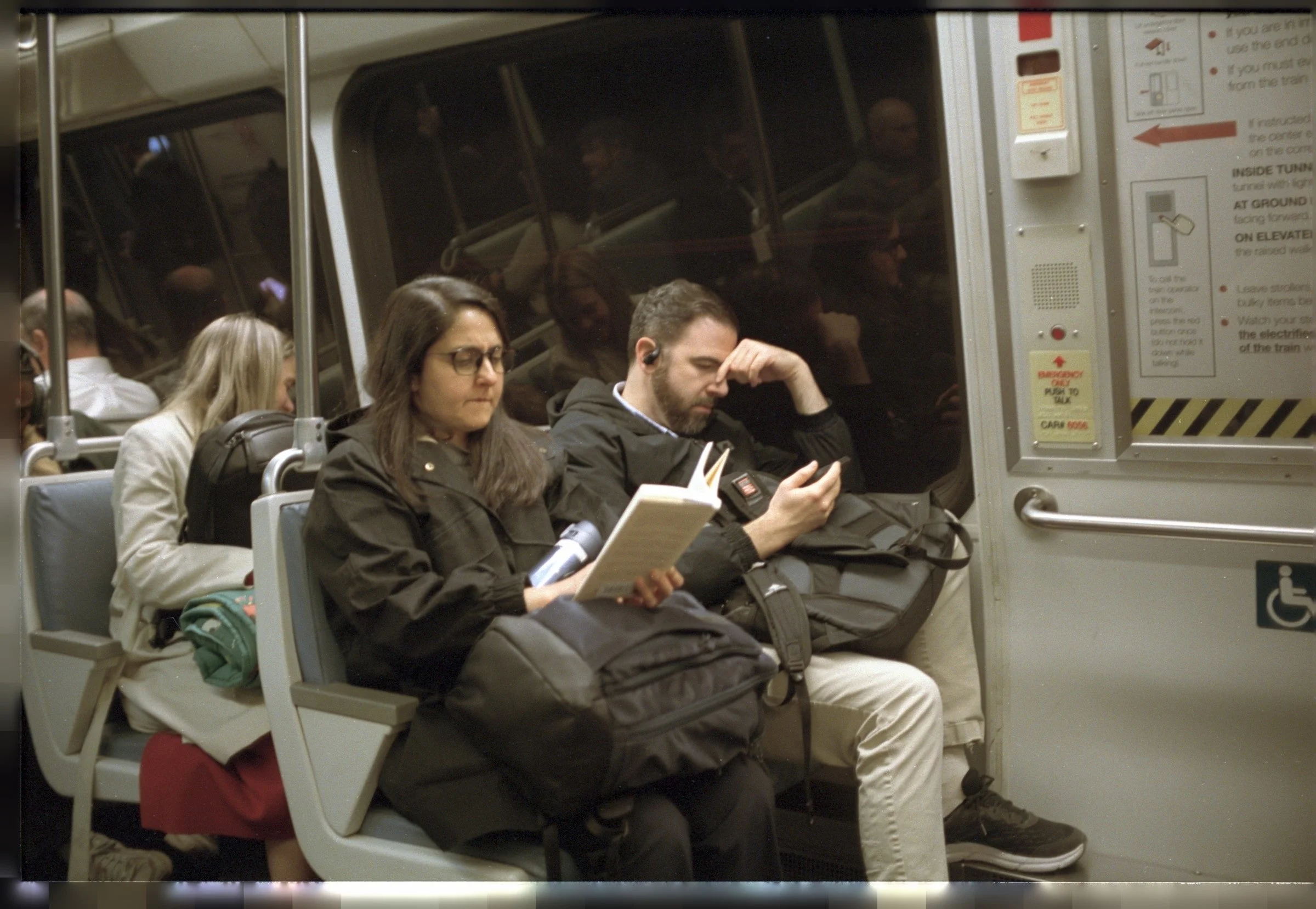
Overhead train car fluorescents usually turn automatic scans green. Linear density math keeps skin tones and white paper neutral.
The difference on my rolls isn’t subtle. Shadow texture I assumed my scanner couldn’t resolve is sitting right there in the linear file the whole time. Skin tones stop turning waxy under station lights, highlights roll off smoothly instead of clipping, and I can batch-process an entire roll in minutes with a live split-wipe to check my work against a baseline conversion.
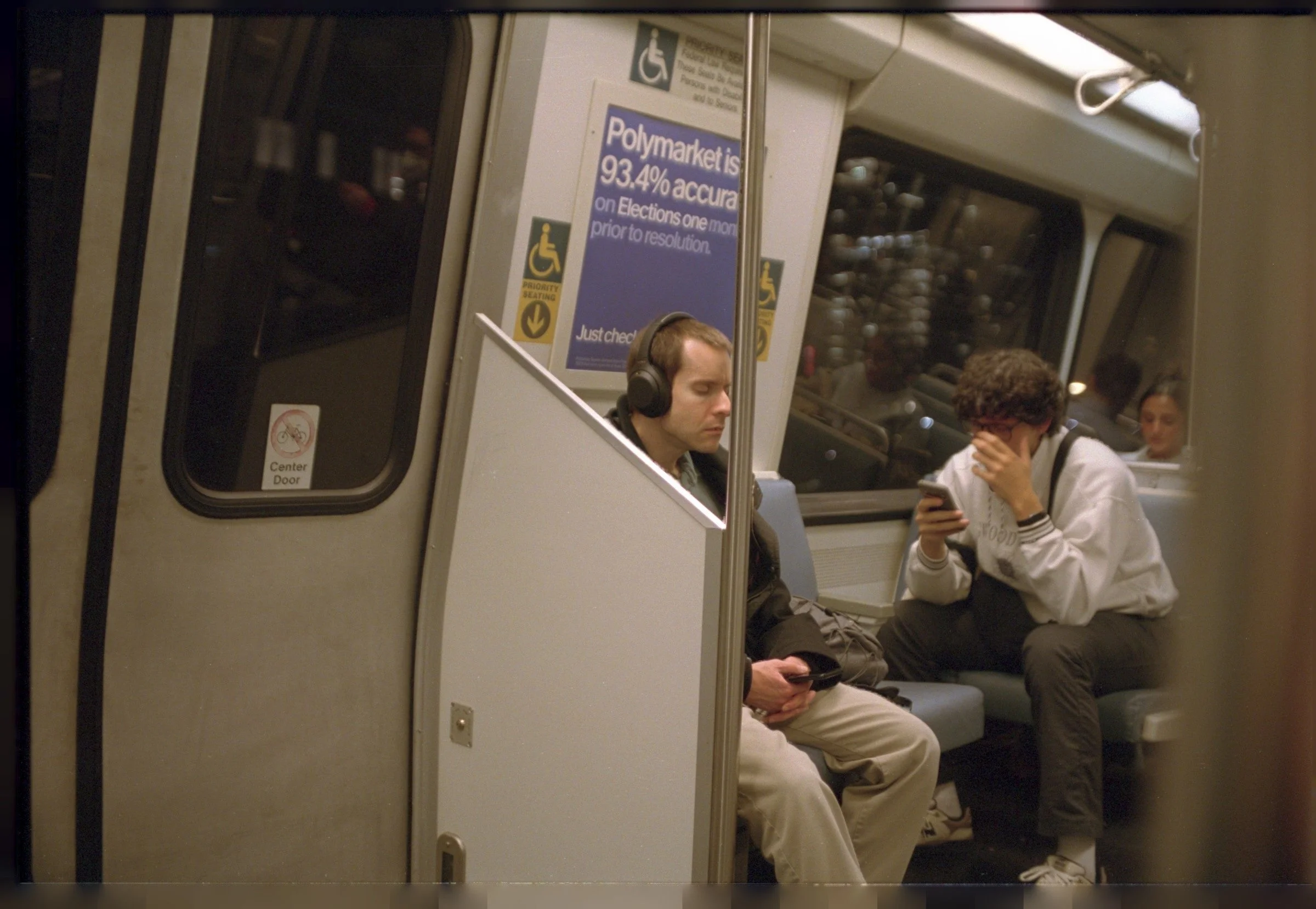
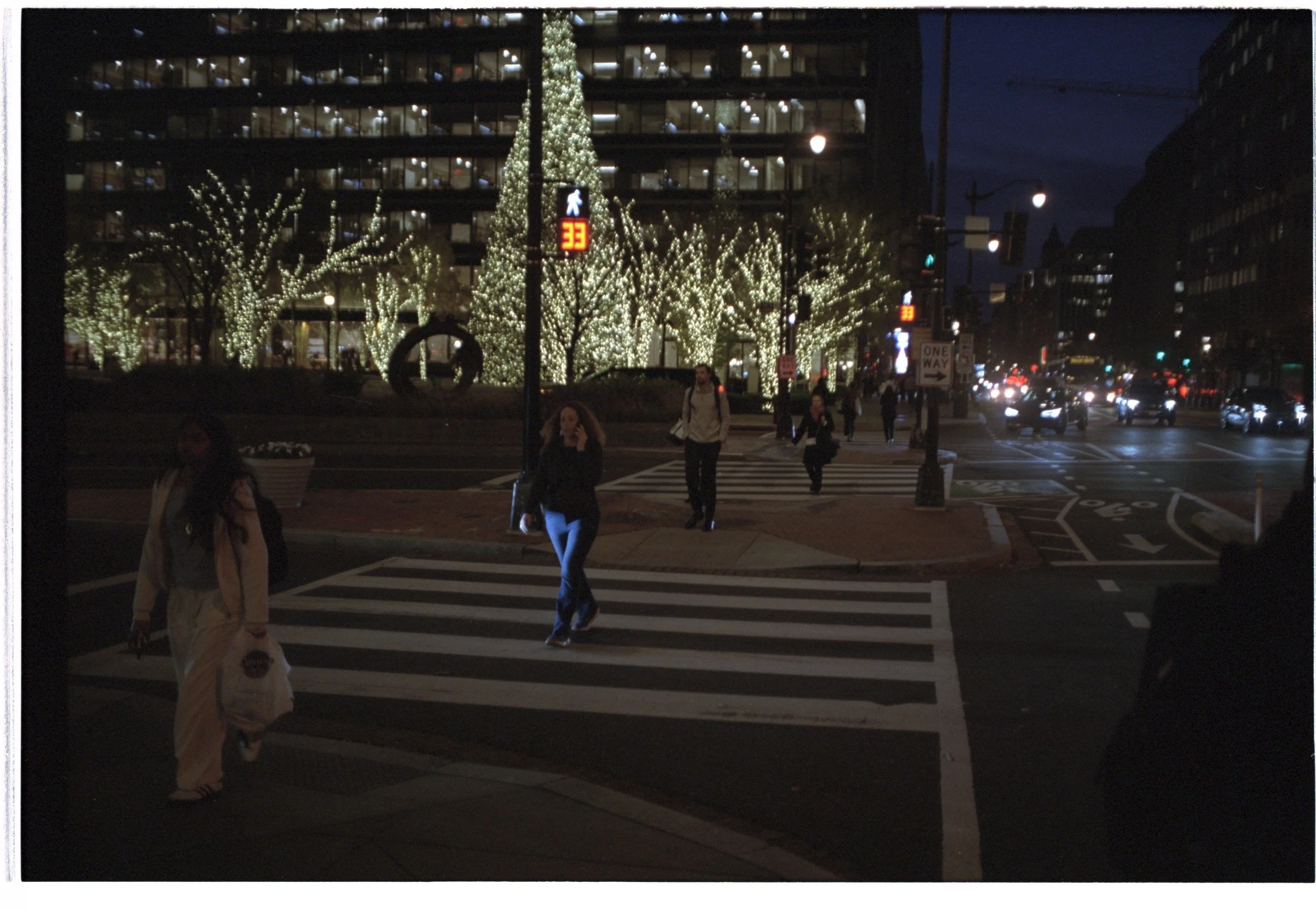
Two more frames from the same roll—consistent color and shadow separation from inside the train out to the crosswalk.
I still have a few bugs to work out on my own rolls, and once those are ironed out, I plan to release it in early January. Film is supposed to be the part of my week that slows things down—getting SilverFast out of the way finally lets the scanning step match the rest of it.