
For more than a decade, I stepped away from still photography almost entirely. My career revolves around video production, which means my days are already filled with cameras, lenses, lighting setups, and deadlines. For a long time, picking up a still camera on my own time felt too much like bringing work home.
That changed when my wife was diagnosed with cancer.
When life suddenly narrows down to appointments, waiting rooms, and the heavy background hum of worry, you start looking for something solid to hold onto. I needed a creative outlet that belonged strictly to me, something tactile and deliberate that had nothing to do with timelines, client notes, or video workflows. Without really planning it, I found my way back to 35mm film.
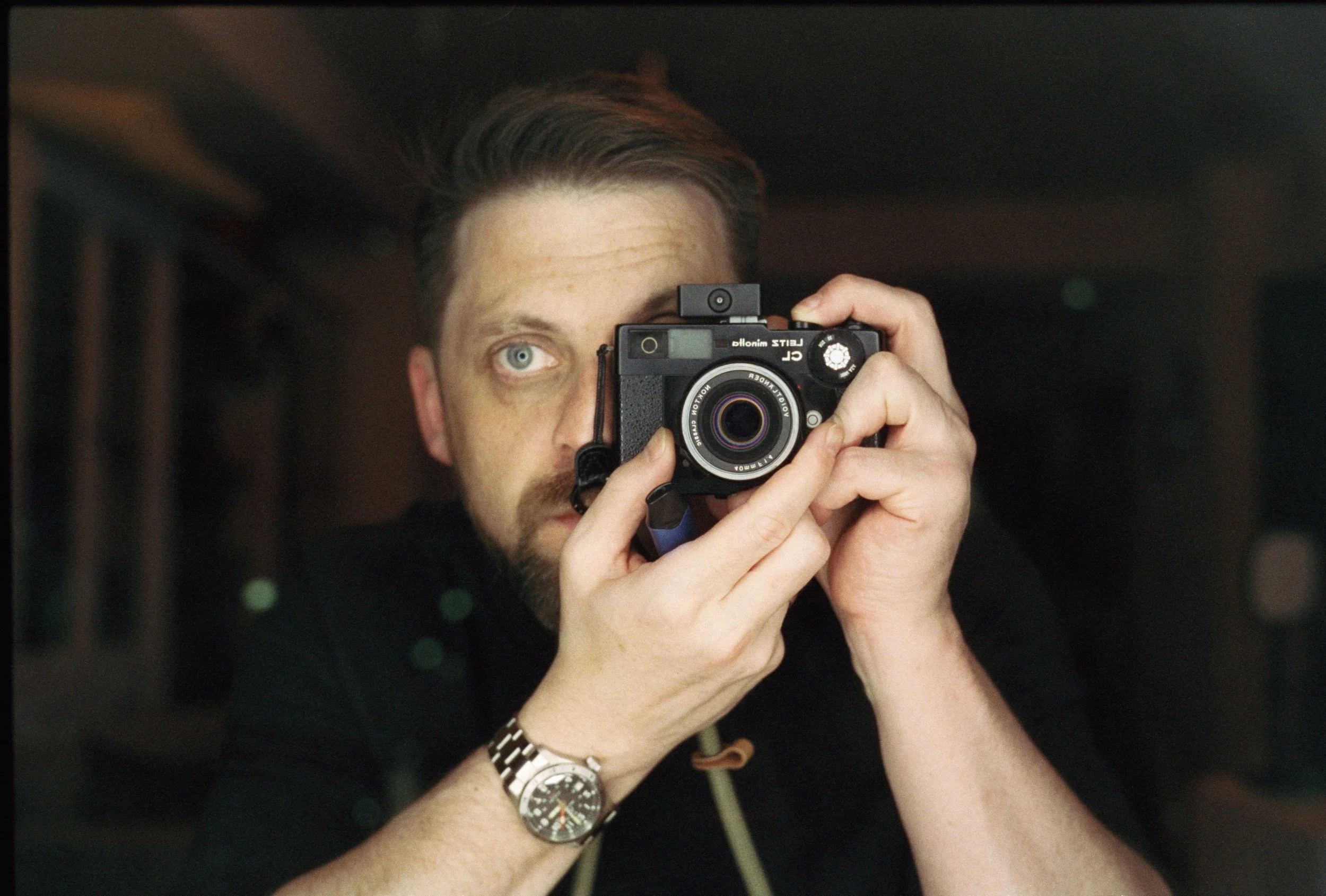
Mirror self-portrait with the Leitz Minolta CL
Because I commute on the Metro every day, street photography became the natural focus. Most of us treat a train ride as dead time to be endured with headphones on and eyes glued to a phone. Carrying a small, quiet rangefinder turned that daily transit into a practice of paying attention. Underground platforms and moving train cars are full of fleeting, unguarded moments: a man in a houndstooth blazer leaning against a center pole lost in his screen, a woman bundled up in a headscarf reading messages beside the glass divider, or a commuter heading down the long escalator with a Grogu backpack.
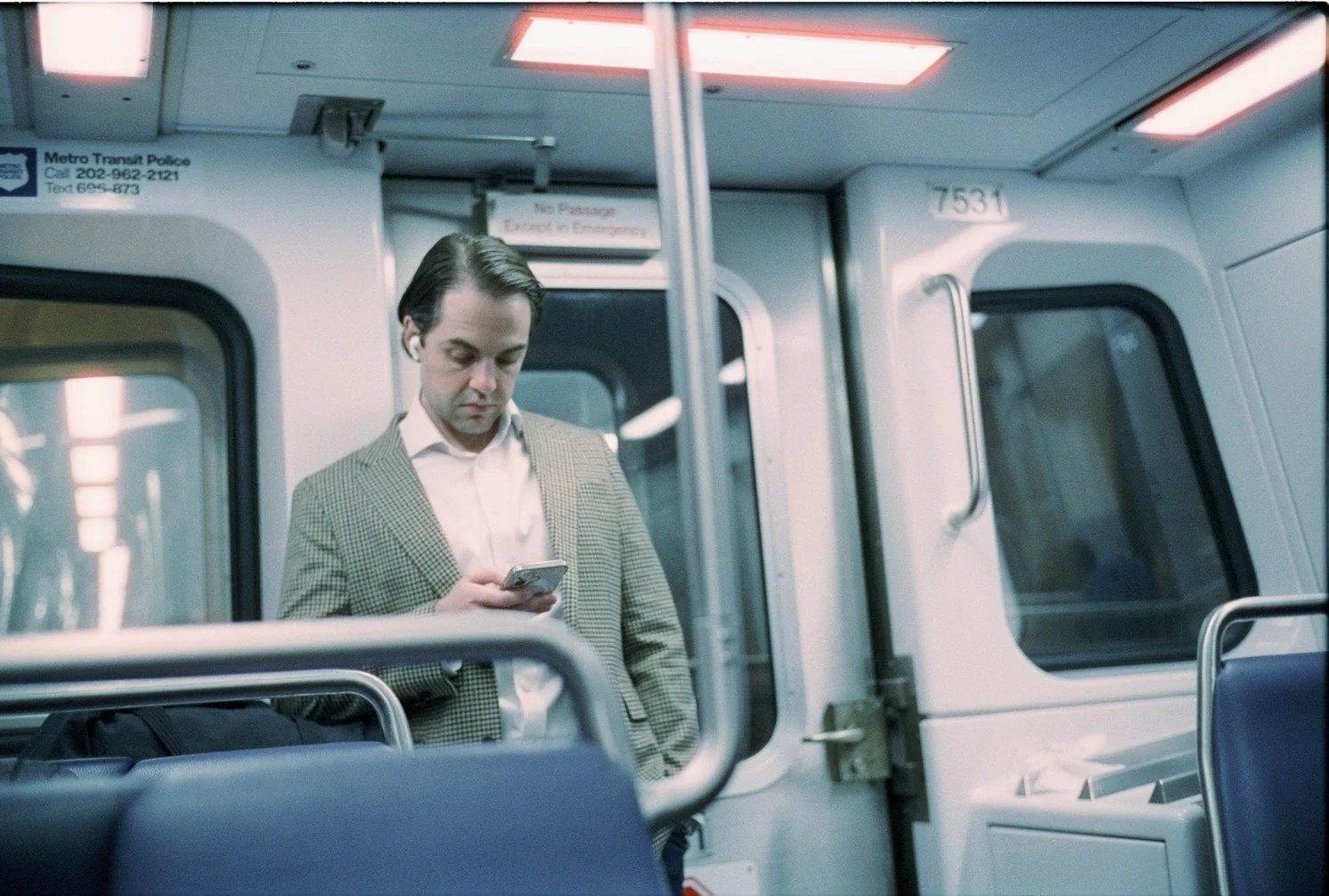
Man in houndstooth blazer inside car 7531
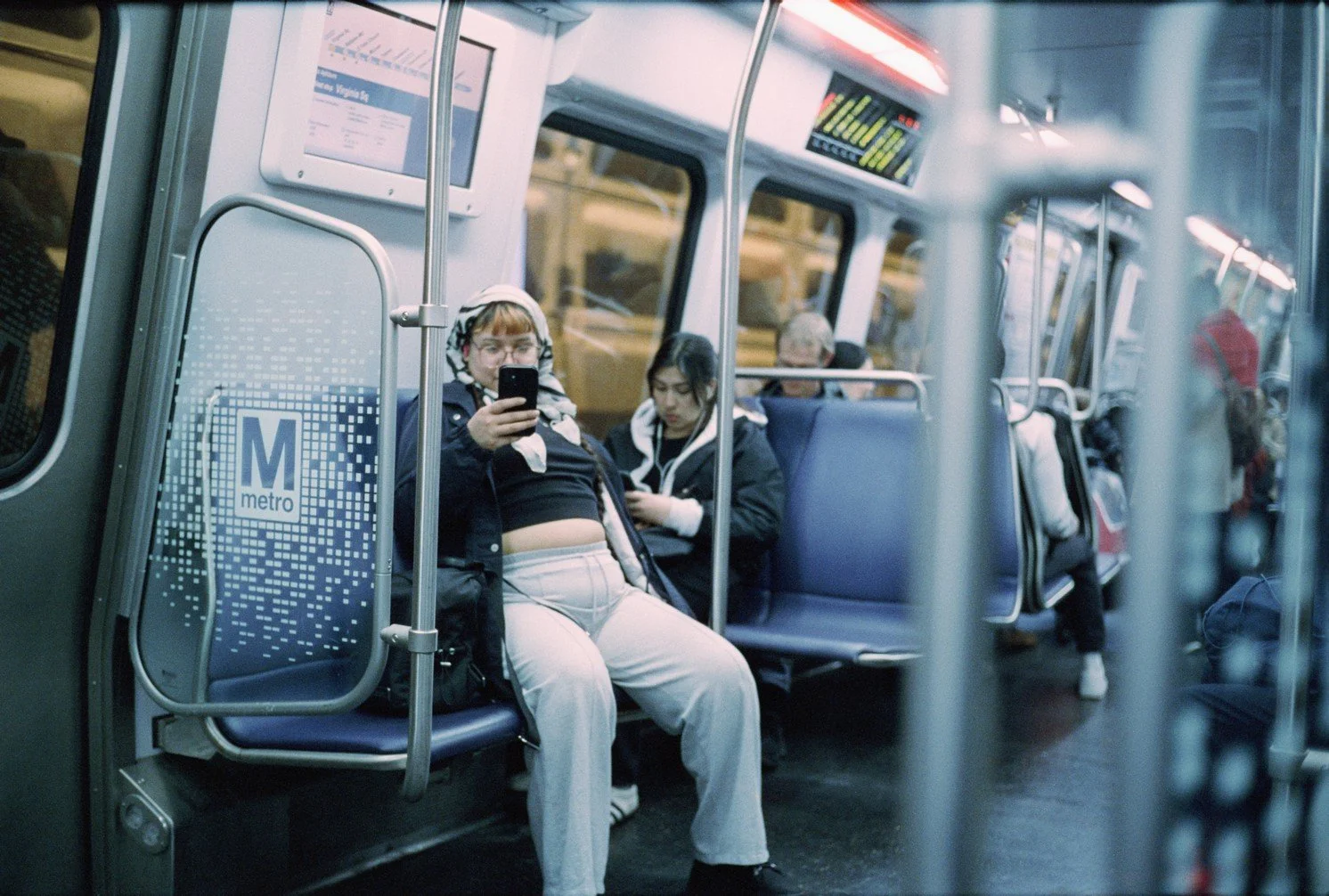
Commuter seated beside the Metro glass partition
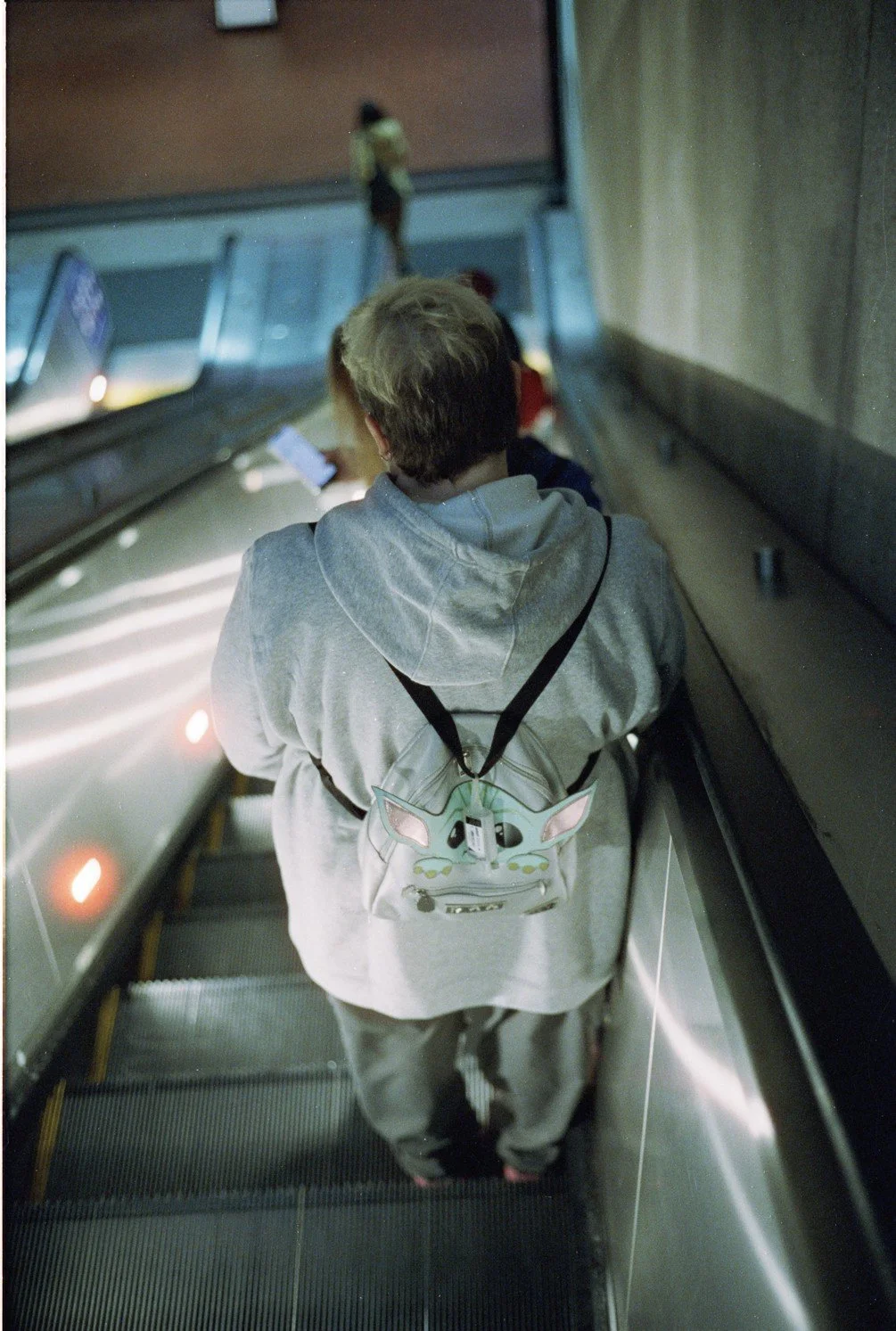
Descending the Metro escalator
With only 36 frames on a roll and no screen on the back of the camera to check my work, I had to slow down and wait for those quiet gestures rather than firing off dozens of frames and hoping one stuck. Sometimes the best frame happens before I even board, caught through the window of an idling train at Metro Center where a woman sits quietly holding a bright bouquet of sunflowers against the reflection of the station signage.
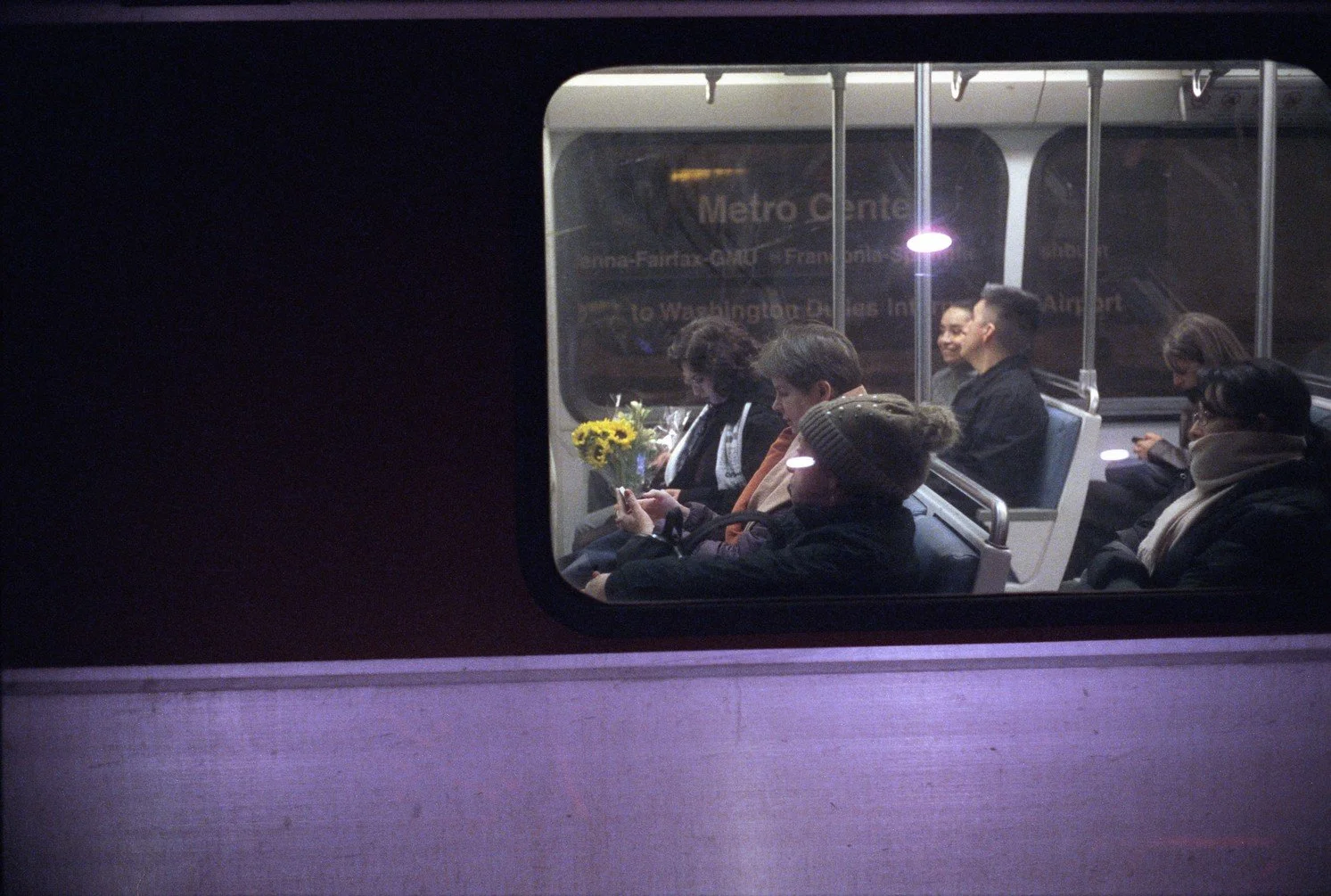
Commuters and sunflowers framed through a train window at Metro Center
Shooting underground and on evening platforms meant reaching for high-speed film, and lately I have been burning through a lot of CineStill 800T. It is a fascinating stock, though it takes some patience to tame. Under the hood, CineStill 800T is actually Kodak Vision3 500T, a tungsten-balanced motion picture film. Cinema film normally has a black carbon backing called a remjet layer that prevents static and light scatter in high-speed movie cameras, and it requires specialized ECN-2 lab chemistry to develop. CineStill strips that remjet layer off before spooling the film for still cameras. That single change allows you to develop it in standard C-41 color chemistry, effectively pushes its sensitivity from 500 to 800 ASA, and leaves behind the film's most recognizable quirk: glowing red halations around bright light sources.
In practice, 800T is both a gift and a puzzle on a daily commute. Its speed makes handheld shooting in dim stations effortless, yet the lighting on the Metro is a chaotic mix of harsh overhead fluorescents, cool modern LEDs, and warm tungsten bulbs. Balancing those competing color casts without letting skin tones turn sickly green or muddy orange takes careful metering and a willingness to accept imperfection.
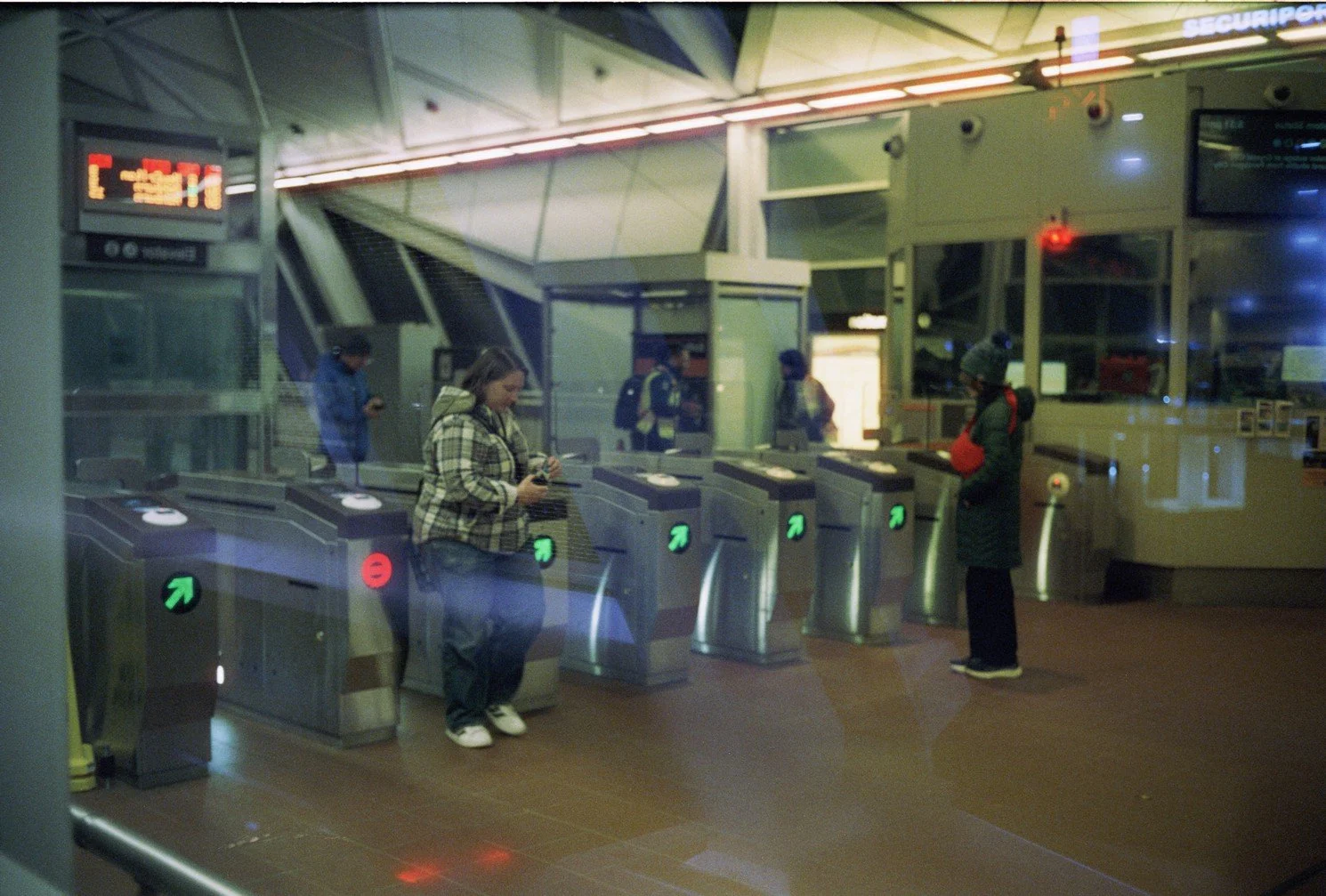
Window reflection of commuters passing through the station fare gates
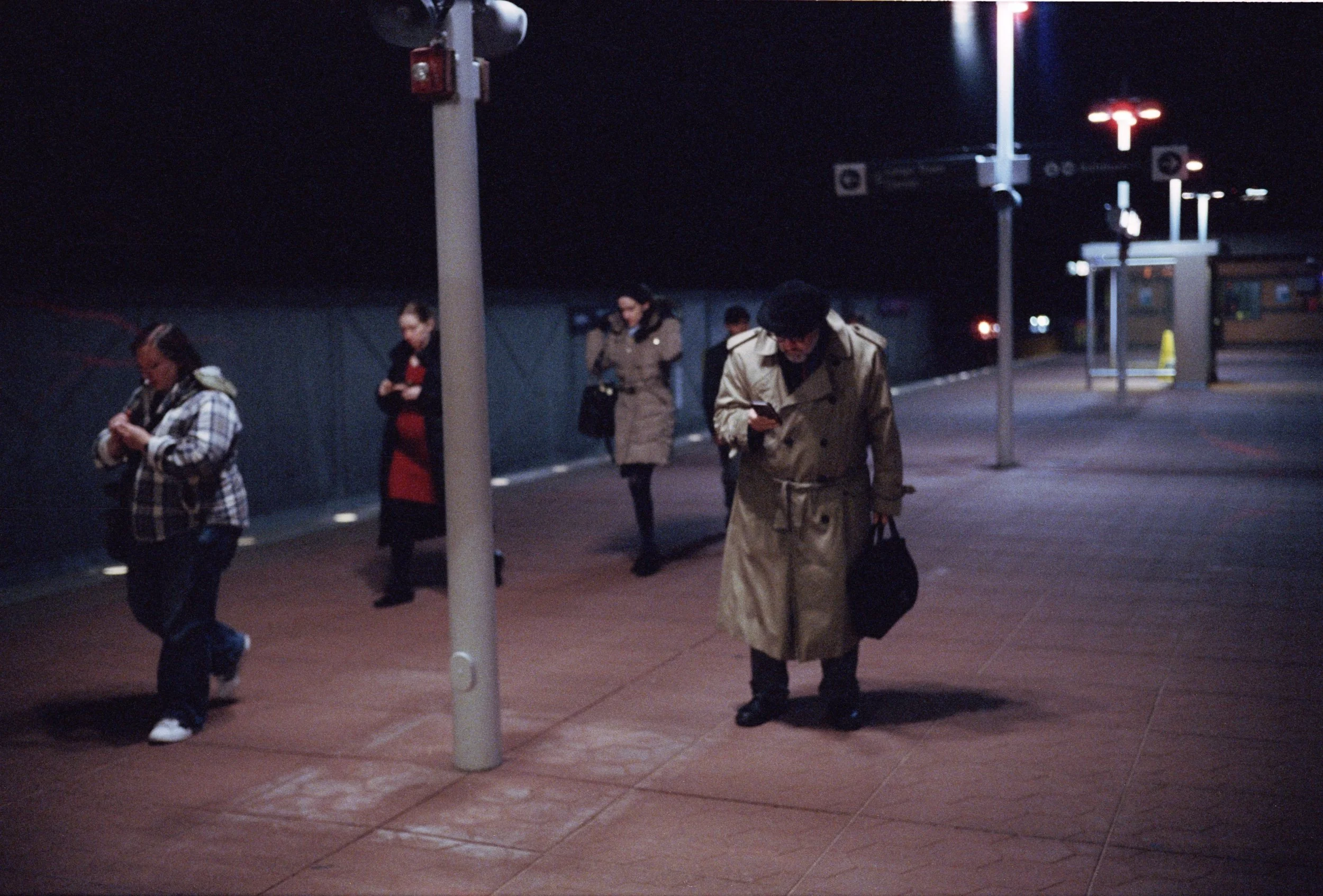
Man in a trench coat on the dark outdoor platform
Then there is the halation itself. Under the concrete canopy of the bus bays at the end of the line, a row of ordinary overhead fixtures blooms into a trail of fiery red orbs, turning a routine transfer into something out of a late-night thriller. Looking through an iron railing into a warm neighborhood cafe window on the walk home, those same red highlights soften the edges of the interior lights. In a close portrait of a fellow rider, though, an unguarded overhead bulb can flare right across the frame and pull the eye away from the subject. Learning when to lean into that glow and when to reframe around it has been half the fun.
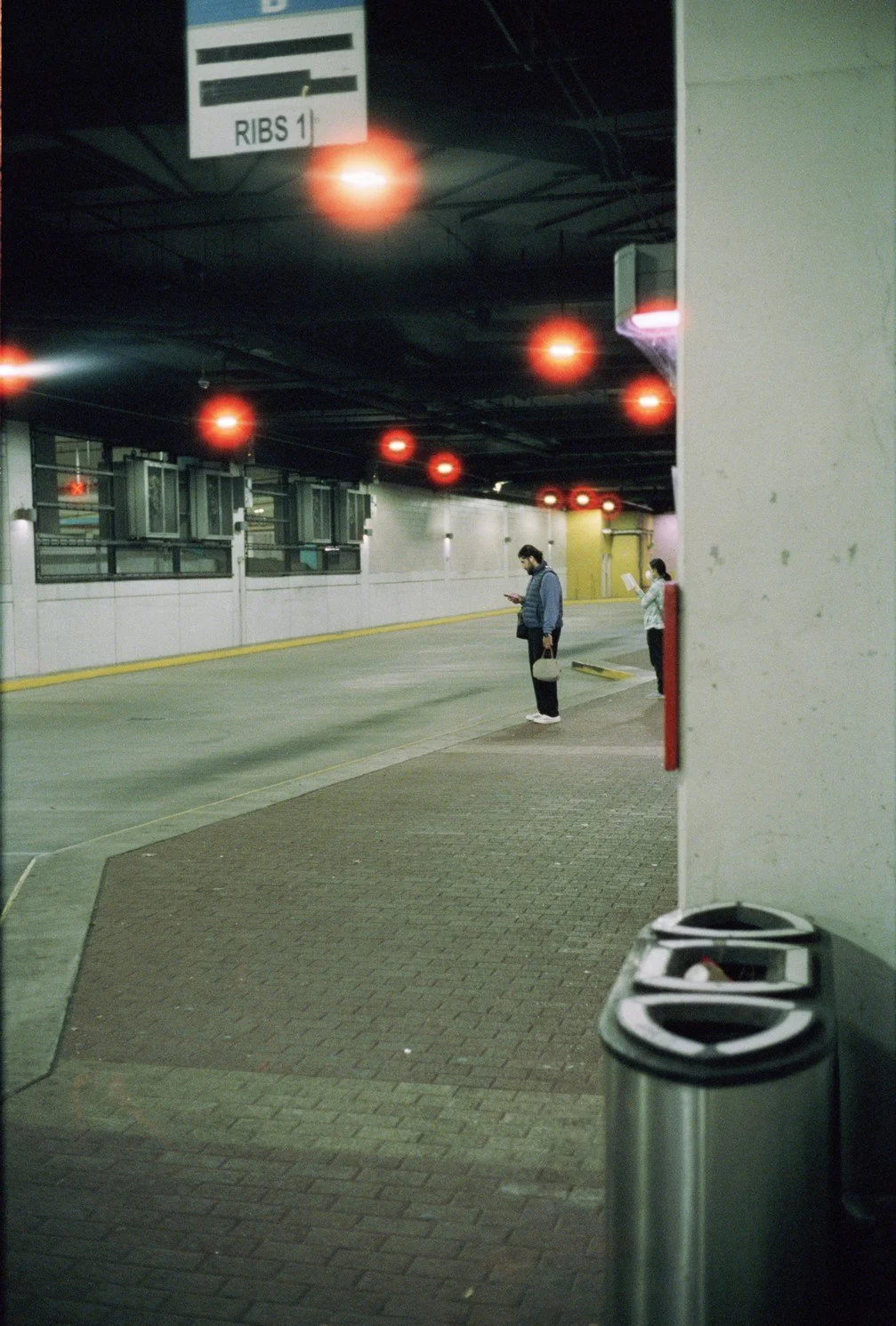
Overhead lights blooming red above the RIBS bus bay
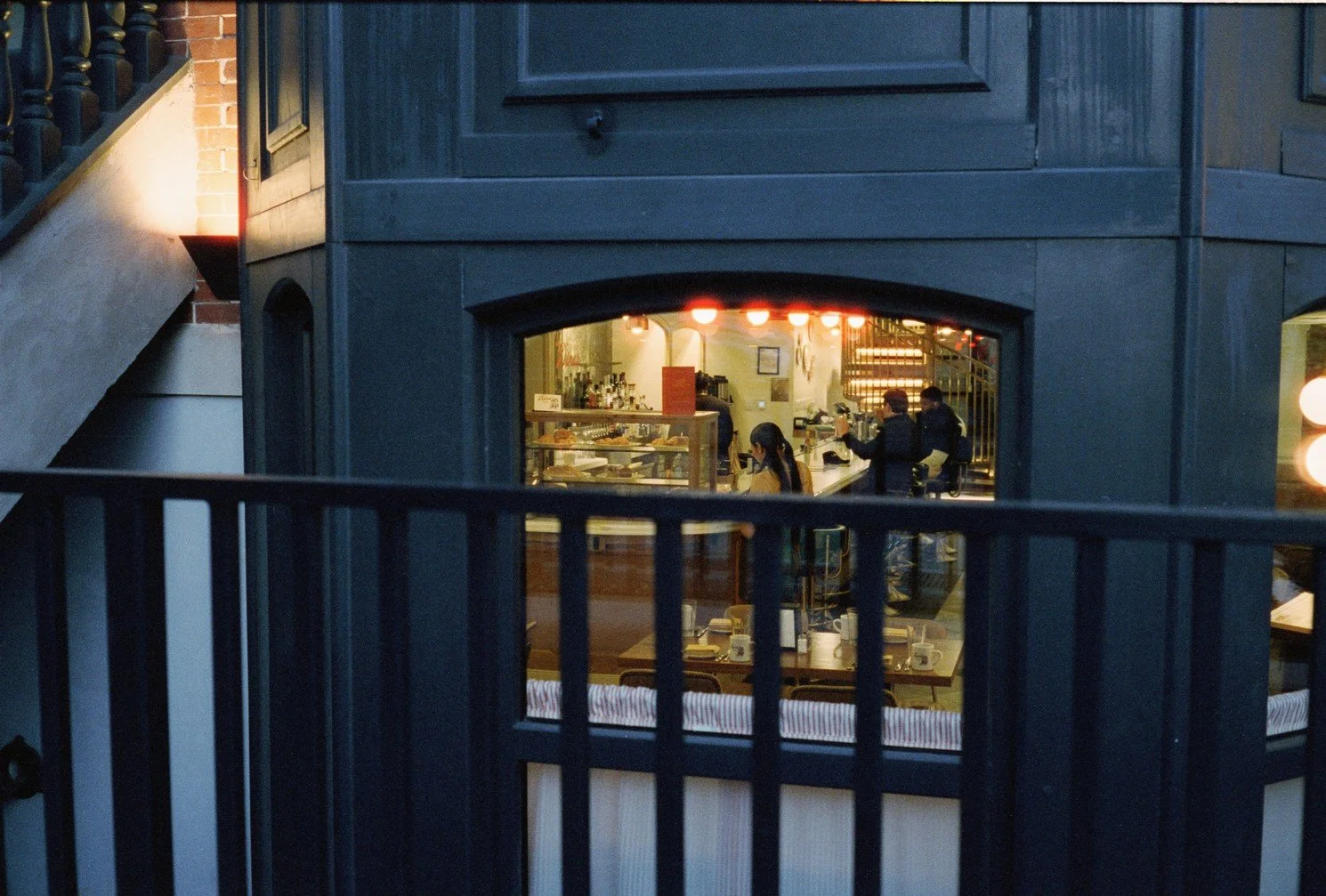
Warm cafe interior framed through an iron railing at night
As much as I love the act of shooting, the part of this return that has grounded me the most happens after the roll is finished. I shoot, develop, and scan everything myself at home.
You don't need a dedicated darkroom to process film. Just a few minutes standing in a pitch-black closet to wind the film onto a reel and seal it inside a daylight developing tank lets you do the rest in normal room light. Still, there is something deeply reassuring about the chemistry and ritual of it all. Color film requires precision: heating the water bath to 102 degrees, measuring out the developer and bleach-fix, keeping time down to the second, and keeping the tank agitating on schedule. When everything outside your control feels uncertain, a process where exact temperatures and exact times reliably yield an image on a strip of acetate feels like a small, welcome anchor.
Once the negatives dry, the final step is scanning them and dialing in the look on my own. Removing the orange mask of color negative film and balancing the highlights and shadows from those mixed-lighting Metro scenes is where the photograph finally comes together. Keeping the entire loop in my own hands, from pressing the shutter on a crowded platform to pulling the wet negatives off the reel and color-correcting the scan at my desk, gives the work a completeness that digital never quite matched for me.
Returning to film hasn't solved anything outside the frame, of course. What it has given me is an hour a day on the train where I am fully present, and an evening ritual at the sink and the scanner where patience is rewarded. Ten years away made me forget how much quiet joy lives inside a roll of film. I am grateful to have found my way back to it.
After a decade away from still photography, shooting, developing, and scanning CineStill 800T on my daily DC Metro commute became an anchor during my wife's cancer—quiet ritual, a way to notice light and small mercy, and a thread of normalcy in a time that felt otherwise untethered.